When I booked my trip to Bosnia and Herzegovina, I imagined wandering through Sarajevo with a camera slung over my shoulder, photographing Ottoman streets, mountain views and the country’s famous waterfalls.
It had been years since I’d travelled abroad. In many ways, this felt like a fresh start: my first trip overseas since the pandemic and an experience relying almost entirely on trains, buses and my own two feet. I couldn’t wait.
Then came the packing.
Without a hire car, every kilogram mattered. I spent days laying out lenses on the floor, lifting my backpack onto my shoulders, removing one piece of equipment only to replace it with another. Every combination felt like a compromise. The camera kit I normally enjoyed carrying on day walks suddenly seemed unnecessarily heavy before I’d even left home.
Eventually a thought surfaced that felt almost absurd. What if I left the camera at home?
The iPhone was already in my pocket. I’d always thought of it as a backup, useful for snapshots but never something I’d choose over my camera. Still, curiosity got the better of me. After watching a few videos about getting the most from its camera system, I packed a small tripod, left everything else behind and hoped I wouldn’t regret the decision.
• • •
Sarajevo
Arriving in Sarajevo after dark only added to the excitement.
The airport taxi drivers were quoting far more than I’d expected, so when I spotted the airport bus already waiting outside, the decision made itself. My travel companion and I activated our eSIMs, climbed aboard and watched the city gradually emerge through the windows as the bus wound its way towards the centre.
Rain greeted us when we arrived.
Maps in hand, we wandered unfamiliar streets in the dark searching for our apartment, occasionally wondering whether we’d taken another wrong turn. Eventually we found it, slightly damp but relieved, and with the satisfying feeling that the adventure had properly begun.
The following morning Sarajevo revealed itself completely.
The city sits in a broad valley surrounded by steep hills, and even in spring there was still snow clinging to the mountains above the rooftops. We climbed to the Yellow Fortress, one of several viewpoints overlooking the city, where minarets, church towers and apartment blocks stretched across the valley below.
It was here that I first noticed the difference travelling light had made.
Normally I would have been adjusting shoulder straps or thinking about which lens to fit before climbing any higher. Instead, I simply carried on walking.
The phone disappeared into my pocket between photographs, leaving me free to enjoy the city rather than constantly thinking about the equipment I was carrying. For the first time in years, photography felt almost effortless.
Back in Baščaršija, Sarajevo’s historic old bazaar, the city settled into a different rhythm.
The steady ringing of coppersmiths’ hammers echoed through narrow streets lined with workshops that have traded here for generations. Ottoman buildings sat comfortably beside Austro-Hungarian architecture, while mosques, churches and synagogues all stood within walking distance of one another, quietly reflecting the country’s remarkable history.
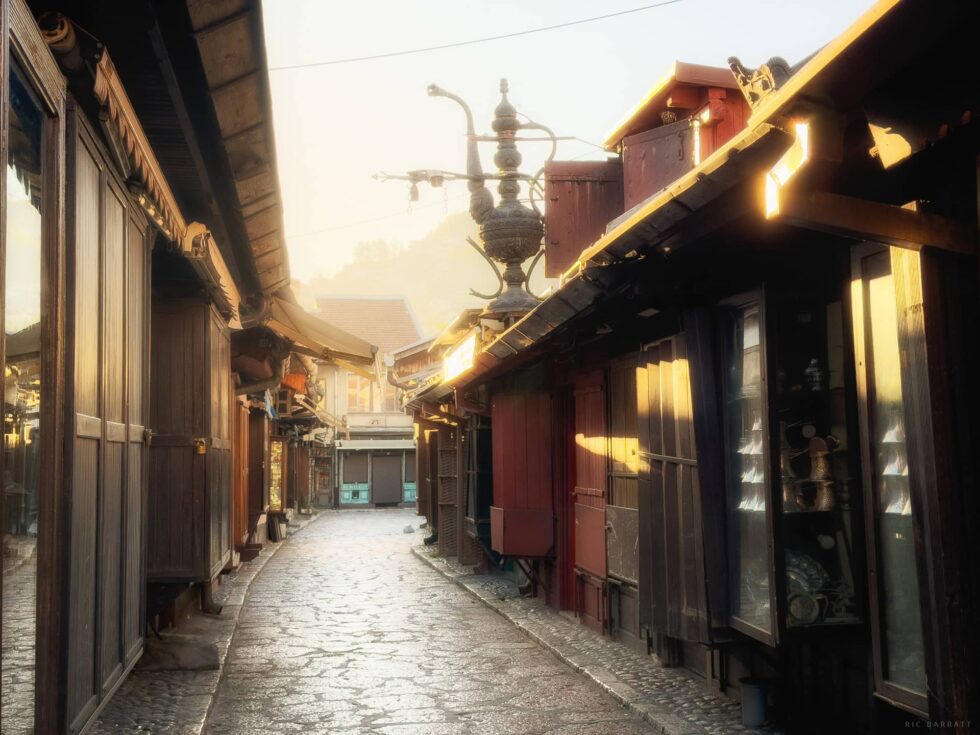
Without a camera hanging from my shoulder, I found myself stopping more often simply to look.
Photographing with a phone lacked the ceremony of unpacking a camera. Seeing something interesting and taking a photograph became almost the same action, removing a small barrier that I hadn’t realised existed.
Over the next couple of days we wandered between the old town and the newer parts of the city. Bullet-scarred buildings stood beside modern offices, reminders that Sarajevo’s history remains visible if you know where to look. One evening we explored again after heavy rain, when the floodlit mosques and cathedrals reflected in the wet streets, giving the city an entirely different atmosphere.
Food quickly became another highlight.
Bosnia seemed full of pizza restaurants, but we tried to resist the familiar and instead discovered ćevapi—small grilled sausages served inside soft flatbread with chopped onions and rich kajmak. It didn’t take long before we were ordering it whenever we had the chance.
Eventually it was time to leave Sarajevo and head south.
• • •
Mostar
The train to Mostar is often described as one of Europe’s most scenic railway journeys, winding slowly through mountains, river valleys and dramatic limestone gorges. It certainly lived up to its reputation, even if the carriage itself was rather less romantic.
Arriving in the city brought another reminder of why leaving my camera behind had been the right decision.
Walking through the streets with a full backpack was tiring enough without another few kilograms of camera equipment hanging from my shoulders. My bag already contained everything I needed for the week ahead. Adding a camera would simply have made every step that little bit harder.
Our accommodation wasn’t ready when we arrived, so we tried to store our bags in one of the town’s new luggage lockers. Unfortunately, the app refused to cooperate.
Normally that might have been frustrating.
Instead, we wandered down to a terrace overlooking the Crooked Bridge, ordered two bottles of cola and simply waited.
That unexpected pause was not an inconvenience. Without a carefully planned photography schedule to follow, there was nowhere we needed to be. We looked through the photographs we’d already taken, made a few quick edits, watched people crossing the bridge below and allowed ourselves to slow down.
Public transport had quietly changed the pace of the journey.
Travelling between places took longer, and carrying everything on our backs naturally encouraged us to spend more time wherever we happened to be. Rather than rushing from one viewpoint to the next, we began settling into each place.
By the time our host messaged to say the apartment was ready, neither of us had minded the wait at all.
Mostar itself felt noticeably different from Sarajevo.
Spring had moved on in the few days since we had arrived in Bosnia. The fleeces we’d relied on in Sarajevo stayed in our backpacks as warmer air drifted up from the south. Surrounded by mountains and divided by the emerald-green Neretva River, the town felt smaller, slower and somehow easier to absorb on foot.
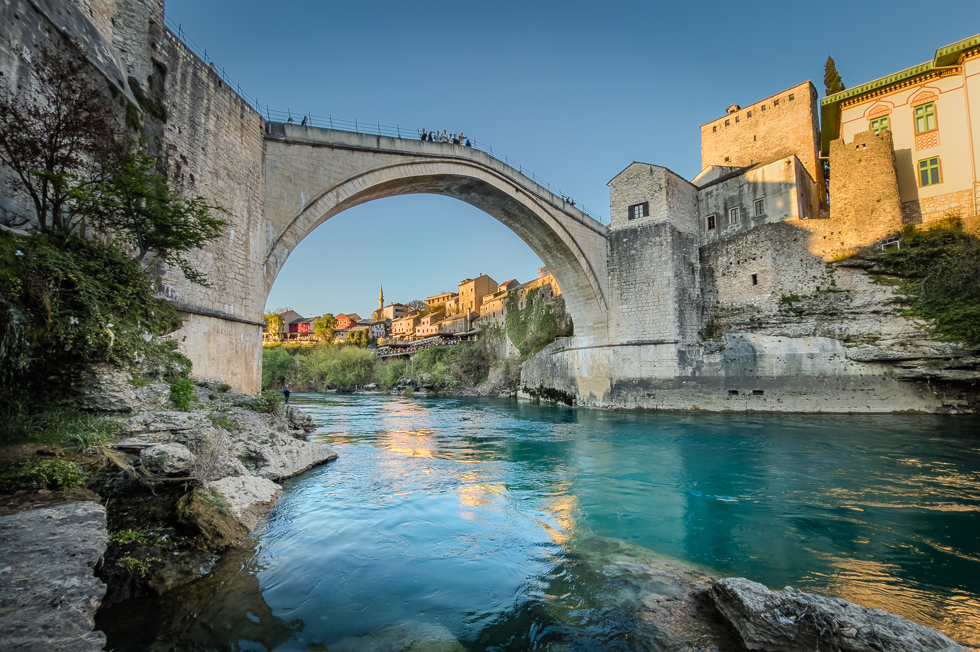
We spent the afternoon wandering its narrow streets, crossing the famous Stari Most and learning more about its history. Like so much of Bosnia, the bridge is beautiful, but its significance reaches far beyond its appearance. Destroyed during the Bosnian War and later rebuilt, it has become a symbol of reconciliation and resilience, reconnecting two sides of a city that had once been divided.
I had imagined photographing Stari Most would be one of the easiest parts of the trip. Instead, it became one of the most challenging. The clear spring sunshine created deep shadows across the river valley, and photographing the bridge with an iPhone proved more demanding than I’d expected. It was a reminder that iconic places don’t always make easy photographs.
The following morning turned out to be one of the highlights of the entire trip.
We joined a small coach tour exploring some of Herzegovina’s best-known sights. The minibus had certainly seen better days, rattling enthusiastically along the roads, but our guide more than made up for its shortcomings.
As we travelled between destinations, he spoke openly about Bosnia and Herzegovina’s complex history, the country’s mix of cultures and religions, and the lasting impact of the war. It wasn’t a history lesson delivered from a textbook. It was thoughtful, balanced and deeply personal, helping us understand not only what had happened, but how those events continue to shape everyday life. I realised how little I really knew.
Travelling has always taught me facts I could have found in books. What it offers instead is context: conversations, perspectives and small moments that make those facts feel human. Bosnia was already becoming much more than a collection of beautiful places.
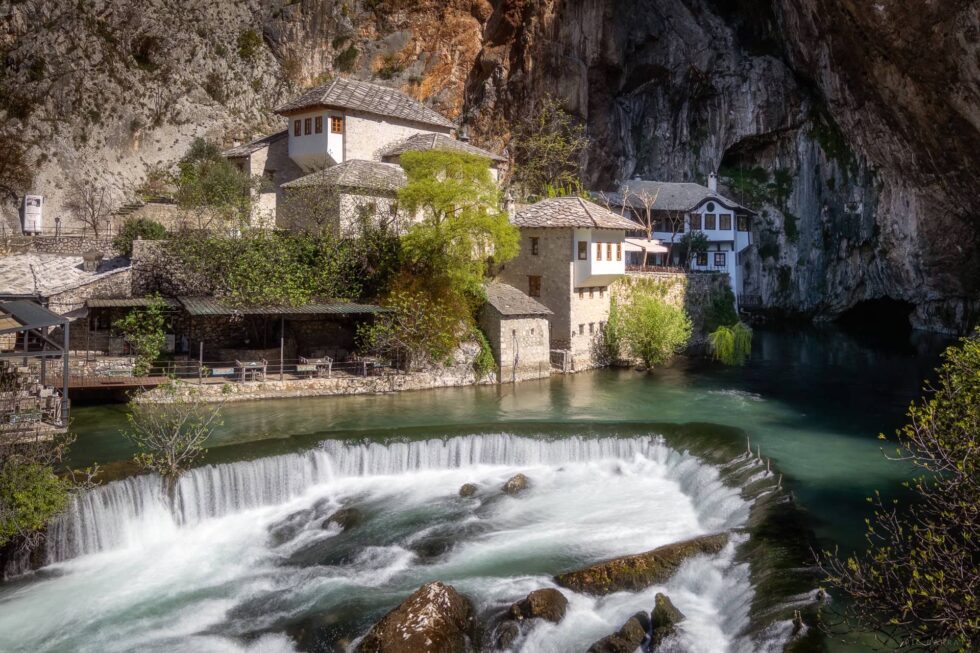
Our first stop on the guided tour was Blagaj. The famous Dervish monastery sits beneath towering cliffs beside the vivid blue waters of the Buna spring, where one of Europe’s largest freshwater springs emerges dramatically from the rock. It is an extraordinary setting, and one where the simplicity of photographing with the iPhone really paid off. The scene suited the phone perfectly.
I wasn’t constantly reaching into my bag to swap lenses or wondering whether I’d brought the right focal length. I wandered around the monastery, waited for gaps between visitors and quietly enjoyed making photographs without thinking too much about the equipment in my hand.
Later that day we arrived at Kravica Waterfalls. This was the place where I finally missed my camera.
The waterfalls themselves were magnificent, spreading across a broad horseshoe of limestone into an emerald pool below. Unfortunately, they also exposed the limitations of travelling with nothing more than a phone.
The ultra-wide lens included too much of the surrounding landscape. The telephoto felt too tight. I found myself wanting a focal length somewhere comfortably in between, one that simply didn’t exist.
Long exposures presented another compromise. The apps I’d been using throughout the trip could still produce convincing flowing water, but they relied on computational photography rather than a true long exposure. The results were limited to 12 megapixels, leaving far less freedom to crop afterwards, and the water never quite achieved the natural softness I was used to creating with my camera and filters.
For the first time during the trip, I found myself wondering whether leaving my camera at home had been the wrong decision.
Travelling with only a phone gave me freedom, but it also demanded compromises. Kravica reminded me that every choice in photography involves giving something up.
• • •
Jajce
The following day we left Herzegovina behind and travelled north towards Jajce.
The journey wound through mountain roads and small villages before eventually arriving in one of the smallest towns we visited.
I’ve always been drawn to smaller places, and Jajce possessed a calmness that contrasted beautifully with Sarajevo’s energy and Mostar’s crowds. The town’s famous waterfall crashes directly through its centre, while medieval streets climb gently towards an old fortress overlooking the valley.
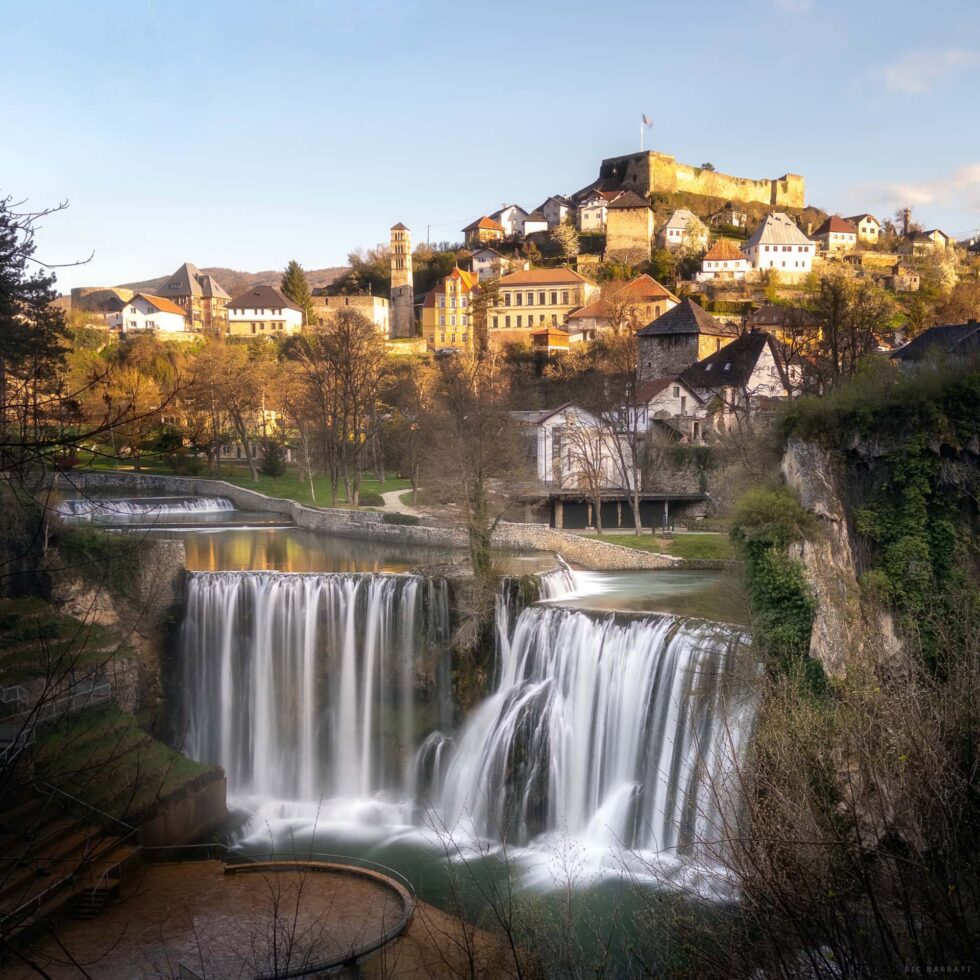
The pace suited us perfectly.
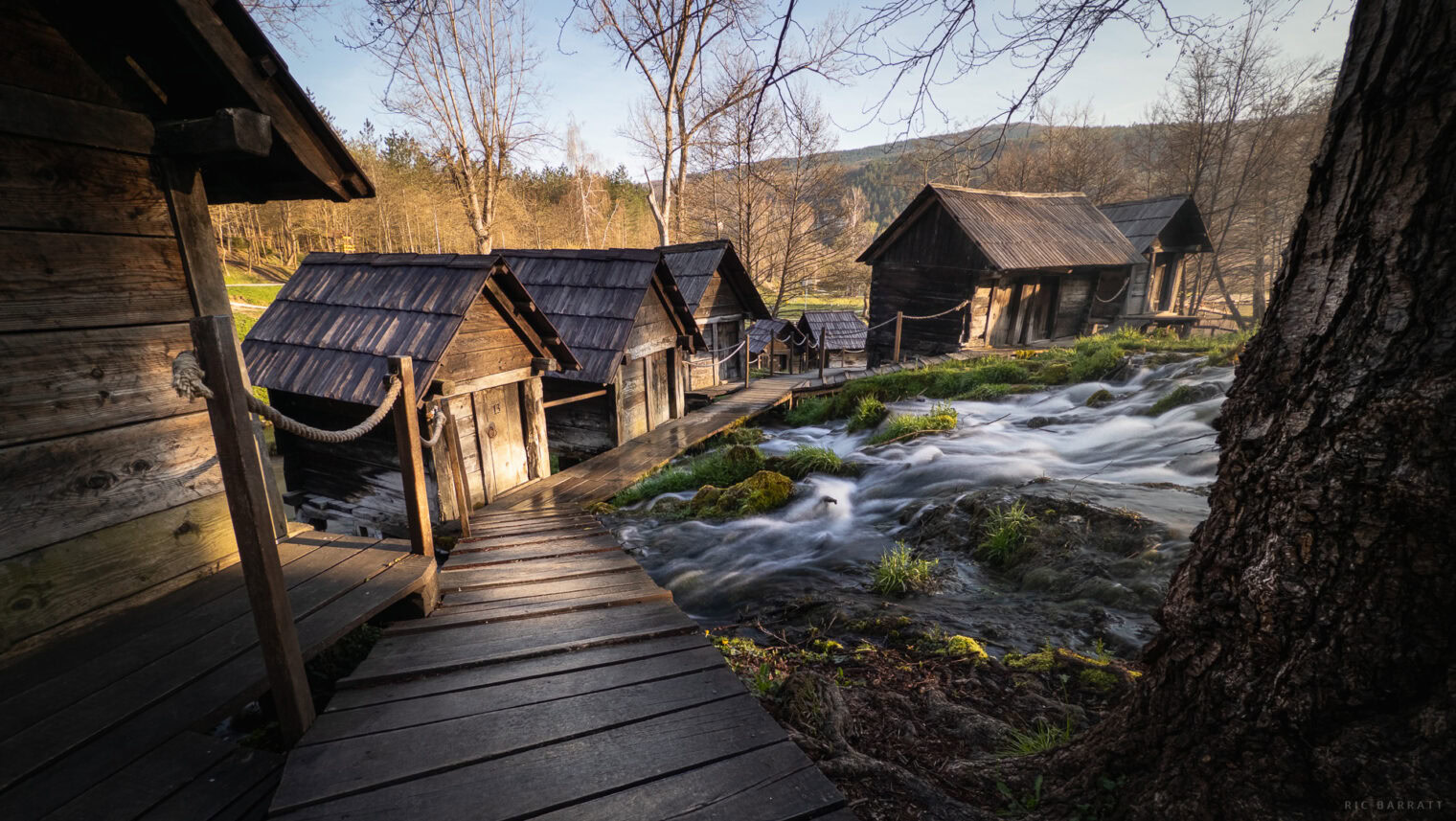
Early the following morning, our host offered to drive us to the nearby Mlinčići Watermills before sunrise. It was an act of kindness that seemed entirely typical of the hospitality we’d experienced throughout the trip.
Conversation relied mostly on translation apps and the handful of Bosnian words we’d managed to learn, yet somehow we understood each well enough.
The old wooden mills looked magical in the early morning light. With barely anyone else around, we spent over an hour wandering quietly between them, photographing wooden walkways and the gentle flow of water through the channels.
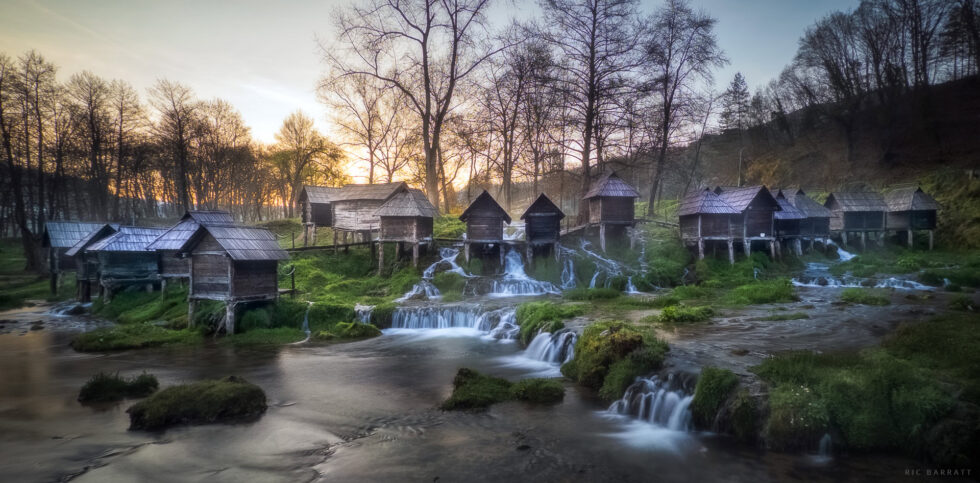
Eventually the peace was interrupted by laughter.
A group of Bosnian women arrived for what appeared to be a day trip. After a few minutes of cheerful confusion, pointing and smiling, we eventually realised they weren’t asking us to move.
They wanted us to photograph them using their cameras and mobile phones.
Language quickly became irrelevant.
We pointed towards places that would make good backgrounds, they rearranged themselves into increasingly elaborate group photographs, and before long everyone was laughing despite understanding almost none of what the others were saying.
It remains one of my favourite memories from Bosnia.
Photography had become something wonderfully simple again. Not camera settings. Not image quality. Just people enjoying themselves and sharing a moment together.
As we walked back towards Jajce beside the lake later that morning, stopping for coffee along the way, I realised that some of my favourite moments from the trip hadn’t revolved around taking photographs at all.
Photography had simply given me a reason to be there.
Eventually it was time to return to Sarajevo.
• • •
Return to Sarajevo
The journey back by coach took much longer than expected. Heavy traffic slowed our progress through the mountains, leaving the driver seemingly determined to make up the lost time wherever he could. It wasn’t the most relaxing journey, but after several hours we rolled back into the capital to find that the city had changed.
Much of the snow had disappeared from the surrounding mountains.
Warmer spring weather had finally arrived, and Sarajevo felt brighter than when we had first explored its streets a week earlier.
That evening we climbed back to the Yellow Fortress.
Standing above the city for a second time felt strangely satisfying. The same rooftops spread out beneath us, but they somehow looked different now. Perhaps it was the changing season, or perhaps it was simply that the city no longer felt unfamiliar.
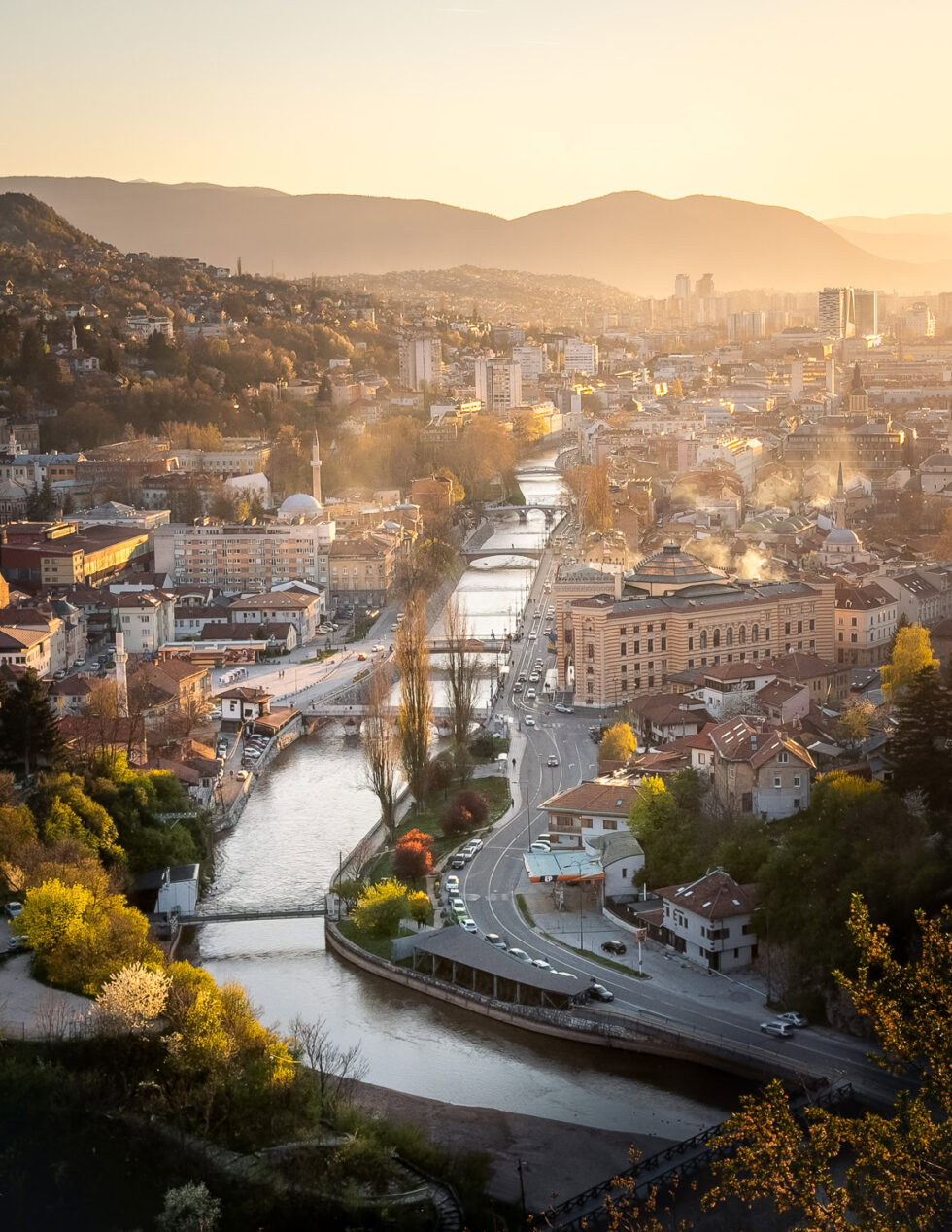
The following morning we visited one of Sarajevo’s more unusual landmarks.
The abandoned Olympic bobsleigh track, built for the 1984 Winter Olympics, now winds through the forest covered in colourful graffiti. Nature and history have gradually reclaimed what was once a symbol of international celebration. Afterwards we walked all the way back down into the city, enjoying the simple pleasure of letting gravity do most of the work.
Our final full day took us to Vrelo Bosne.
As we stood discussing which tram to catch, an elderly gentleman waiting nearby overheard our conversation. Smiling, he interrupted politely.
“Don’t take the tram,” he explained. Track works meant it wasn’t running the full route. We’d have to change onto a replacement bus halfway.
“You should get my bus instead.”
During the journey he asked about our travels, genuinely interested in where we’d been and what we thought of Bosnia. He told us he had spent much of his own life travelling the world and casually mentioned the astonishing number of airports he’d visited over the years.
He spoke warmly about Sarajevo, but with equal enthusiasm about places much further away. Istanbul, he insisted, was somewhere I simply had to visit for photography. He described Türkiye with such affection that, by the time we reached our stop, another future journey had quietly found its way onto my ever-growing list.
After showing us the road towards Vrelo Bosne, we thanked him and went our separate ways.
Vrelo Bosne itself was wonderfully peaceful. Wooden bridges crossed crystal-clear streams beneath tall trees, while swans drifted quietly through the water. It was the perfect place to slow down once again.
Here the iPhone returned to its strengths.
Using one of the long-exposure apps, I photographed the gentle movement of the water flowing beneath the bridges without unpacking filters or setting up a more complicated camera system. The results weren’t identical to what my camera would have produced, but that hardly mattered.
The photographs captured the feeling of the place.
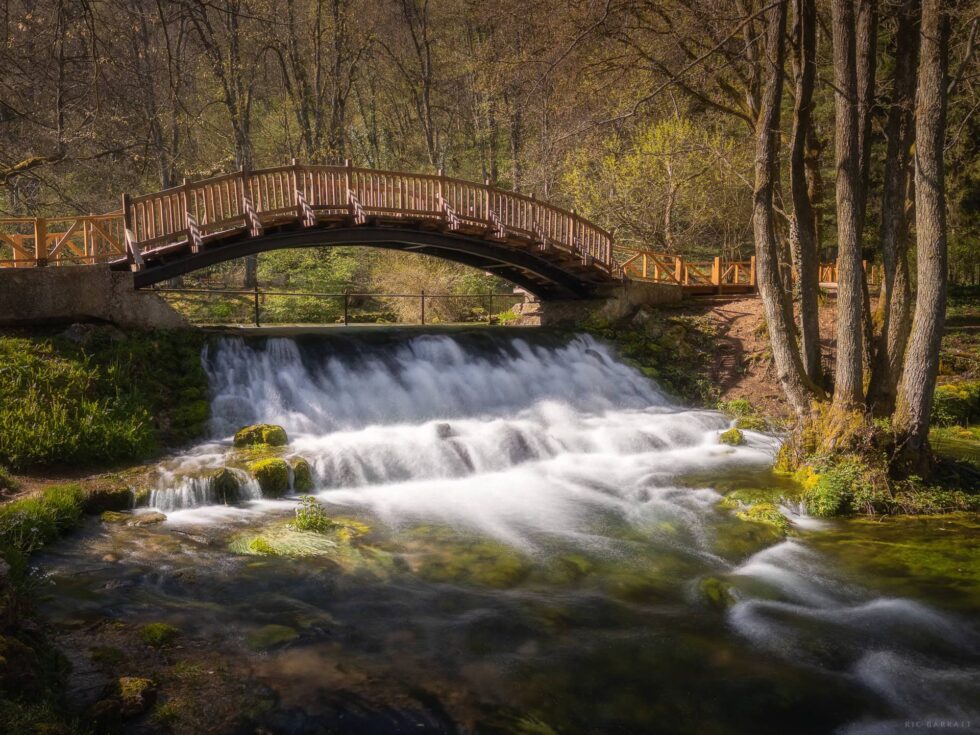
As we walked back towards the bus stop later that afternoon, we heard someone calling across the road.
It was our new friend.
He was hurrying towards the same bus back into Sarajevo and suggested we hurry too or risk it departing without us. We climbed aboard together and spent the journey continuing our earlier conversation as though we’d known each other for much longer than a few hours.
Back in the city we laughed about the coincidence before saying goodbye once again.
Much later that evening, while buying snacks from a small corner shop, I looked up and found myself smiling.
Standing across the shop was the same gentleman. He recognised us immediately.
We exchanged amused looks at the sheer improbability of meeting for a third time in a single day in a city as large as Sarajevo. There wasn’t really anything left to say. As I left the shop, I simply turned, smiled and waved.
Sometimes that’s enough.
The following morning our time in Bosnia came to an end.
Throughout the trip we’d visited beautiful towns, climbed viewpoints, photographed waterfalls and admired remarkable landscapes. We’d also walked streets still marked by conflict, listened to stories of resilience, and spoken to people whose lives had been shaped by events that still feel astonishingly recent. It reminded me that the effects of war continue long after the fighting ends.
• • •
Looking back, leaving my camera at home turned out to be about far more than reducing the weight of my backpack.
Yes, there were moments when I missed it. Kravica Waterfalls almost certainly deserved something better than a phone camera, and there are photographs I know I could have made differently with my usual equipment.
But travelling with only an iPhone changed something else.
It removed many of the small barriers between experiencing a place and photographing it. I spent less time thinking about lenses, filters and settings, and more time noticing conversations, landscapes and the people around me.
Bosnia and Herzegovina gave me far more than a collection of photographs.
It gave me a deeper appreciation of travelling slowly, the kindness of strangers, and the reminder that the most memorable journeys are rarely defined by the equipment we carry.
Sometimes they’re defined by the people we meet along the way.