I’ve thought about using a drone more than once in landscape photography. The images they produce can be striking: viewpoints that feel almost impossible from the ground, opening up terrain in a way that isn’t available through walking alone.
There is an immediacy to it: lifting a camera above tree lines, following the shape of a ridge, revealing patterns in the land that only become visible from above.
A recent trip to Albania brought this into focus.
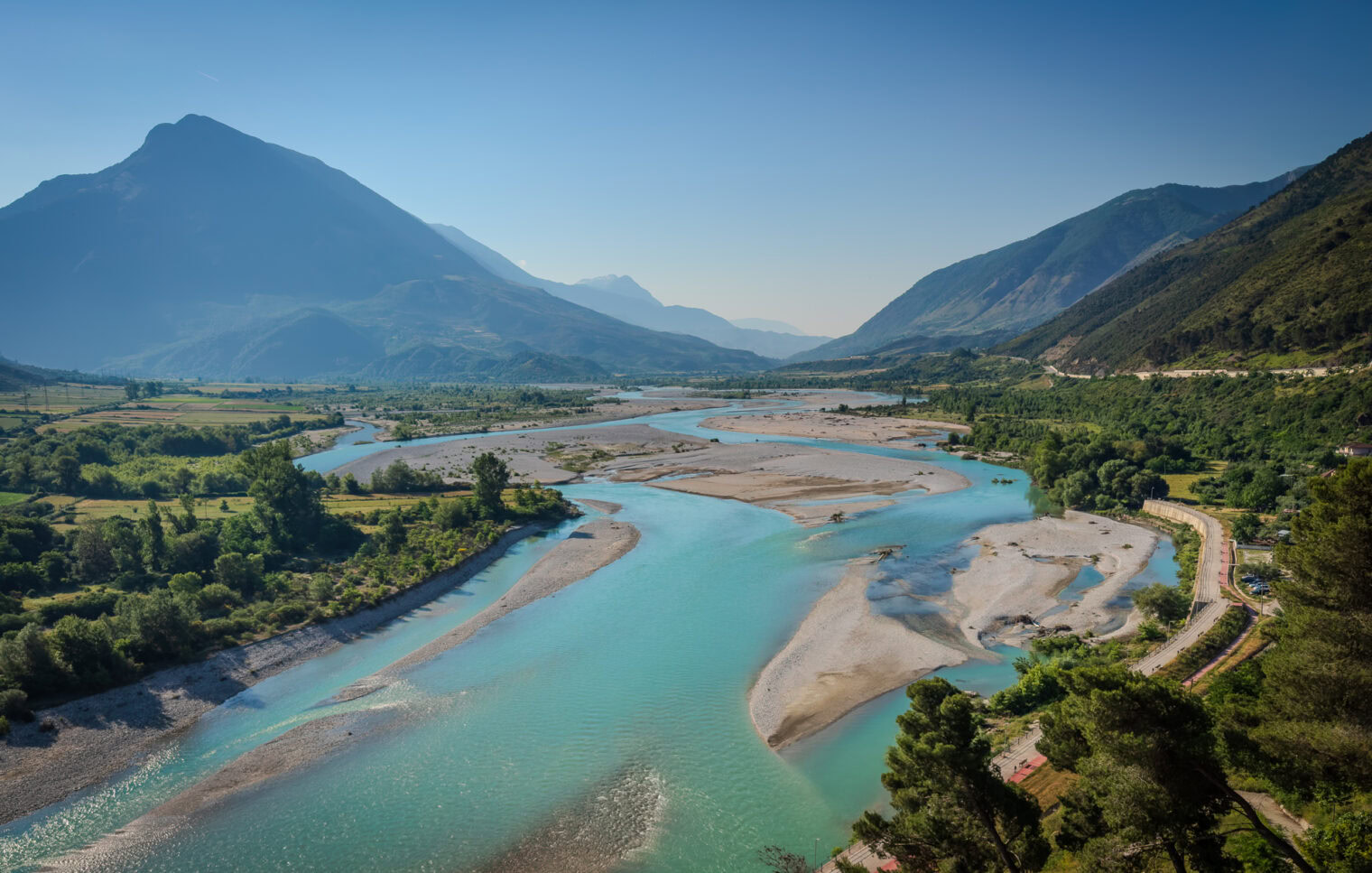
My travel companion was able to send his newly acquired drone over the Vjosa River, capturing an elevated view of the water cutting through the valley, with mountains rising beyond it. From the riverbank, the scene is more compressed. The middle ground tightens, and leading lines shorten, as if the composition is vertically compressed. Without a higher viewpoint or a drone, that wider structure in the landscape remains unseen.
I found myself looking for higher ground, and moved on to Tepelenë, a nearby town set high above the river. I came across a couple of viewpoints and was able to make images that echoed those my friend had achieved with his drone. By then, the quality of the light had softened slightly. In return, I spent time walking through the streets, stopping for coffee, and staying longer in a place I might otherwise have passed through. Exploring the town became part of the experience and the journey.
That kind of diversion is part of what I value in working from the ground. Photography, for me, often involves slowing down and responding to what is immediately accessible, rather than bypassing it in search of an overview.
There is a physicality to reaching a place. The time it takes, the movement through the landscape, and the shift in perspective all shape how a scene is encountered.
A drone changes that relationship. It offers a position above the landscape without being within it in the same way. While it is a powerful tool, I prefer the slower engagement and presence that comes with staying on the ground.
For now, that is where I tend to work from.