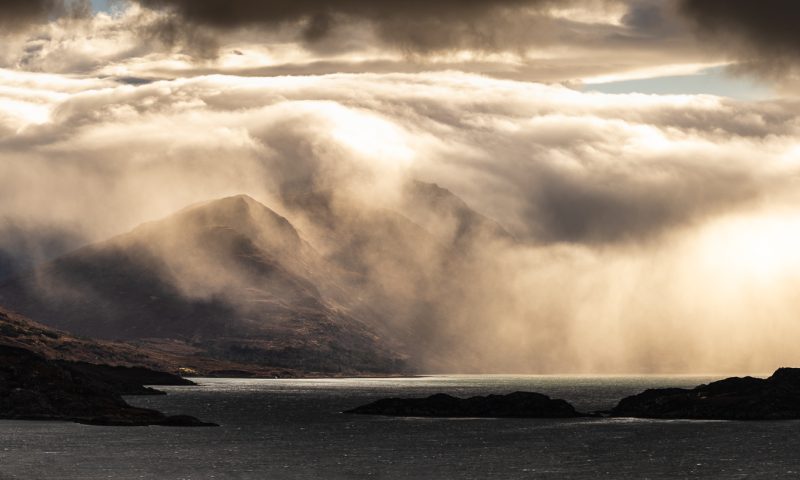
For a long time, I believed that the best weather for landscape photography was always a mix of blue sky and scattered clouds. I thought only those conditions could give me the warm, colourful light I imagined in my favourite sunset shots. Overcast skies felt dull, and completely clear skies seemed boring. If the weather wasn’t “perfect,” I often stayed home, missing out on the chance to take any photos at all.
Learning to embrace all types of weather
On a trip to the Northumberland Coast, I spent several days cooped up in my accommodation, watching flat, overcast skies and feeling frustrated. I had pictured capturing a golden beach leading up to Bamburgh Castle, with a sunset sky ablaze with colour. It wasn’t going to happen, and I started feeling disappointed and a little disheartened.
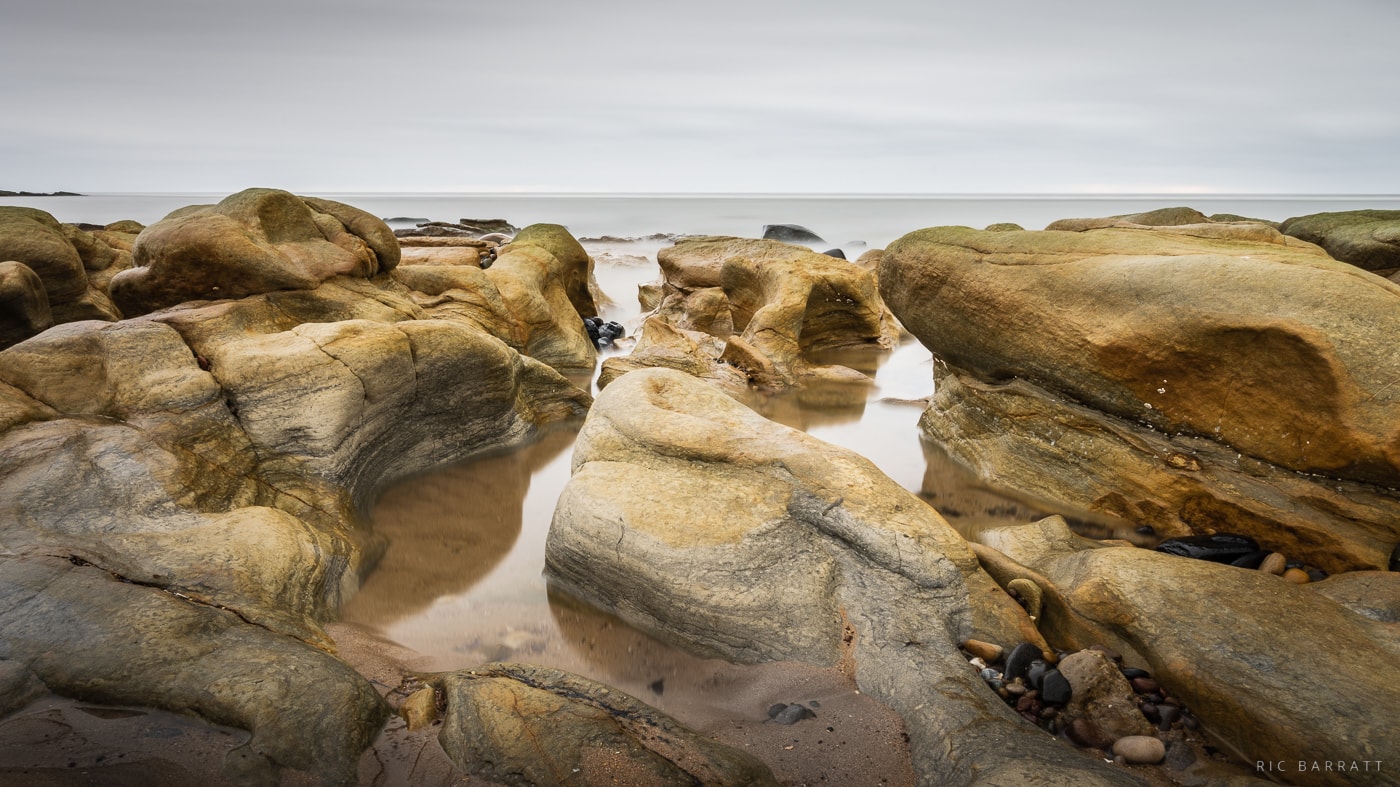
I eventually accepted that Mother Nature wasn’t going to deliver the weather I had hoped for—and that was perfectly fine. Instead of clinging to expectations, I grabbed my camera bag and headed out. On an overcast beach, I let myself photograph whatever caught my eye. Hours passed as I experimented with angles, capturing the rocks’ subtle textures and the sea’s smooth motion with long exposures.
The experience reminded me of why I fell in love with photography in the first place. Without the pressure of perfect light or the expectation of a dramatic sunset, I could focus purely on composition, shapes, and movement. Some of the images I created that day are now among my favourites, and they even hang on my wall at home.
Flexibility over perfection
Before that trip, I was far too fixated on forecasts, sunrise times, and perfect locations. When the “ideal” conditions failed to appear, I would become frustrated, sometimes even upset. My obsession with weather patterns was slowly taking the joy out of my hobby.
Since then, I’ve learned that there really isn’t such a thing as “perfect weather” for landscape photography. There is only preferred weather for the type of photography I want to do on that day. Cloudy days are perfect for capturing waterfalls or delicate flowers, where soft, diffused light brings out subtle detail. Bright, sunny days might inspire abstract or black-and-white images, playing with strong shadows and contrasts. Even rain or mist can create a mood that is impossible to replicate on clear days.
Embracing opportunity
Now, I focus on being flexible and adaptable. Every day, every time of day, offers new opportunities to explore with my camera. By paying attention to the light, textures, and atmosphere around me, I’ve discovered that even the weather I once considered “bad” can yield remarkable images.
Photography has become more about presence and curiosity than chasing a single, ideal scene. I enjoy the sound of the wind through trees, the smell of wet earth after rain, and the feeling of mist on my face while I frame a shot. These moments make the process as meaningful as the final images themselves.
By letting go of rigid expectations, I’ve learned to embrace the unpredictability of nature. Every cloud, sunbeam, or drizzle brings its own beauty, and the best weather for landscape photography is whatever inspires you to get outside and create.