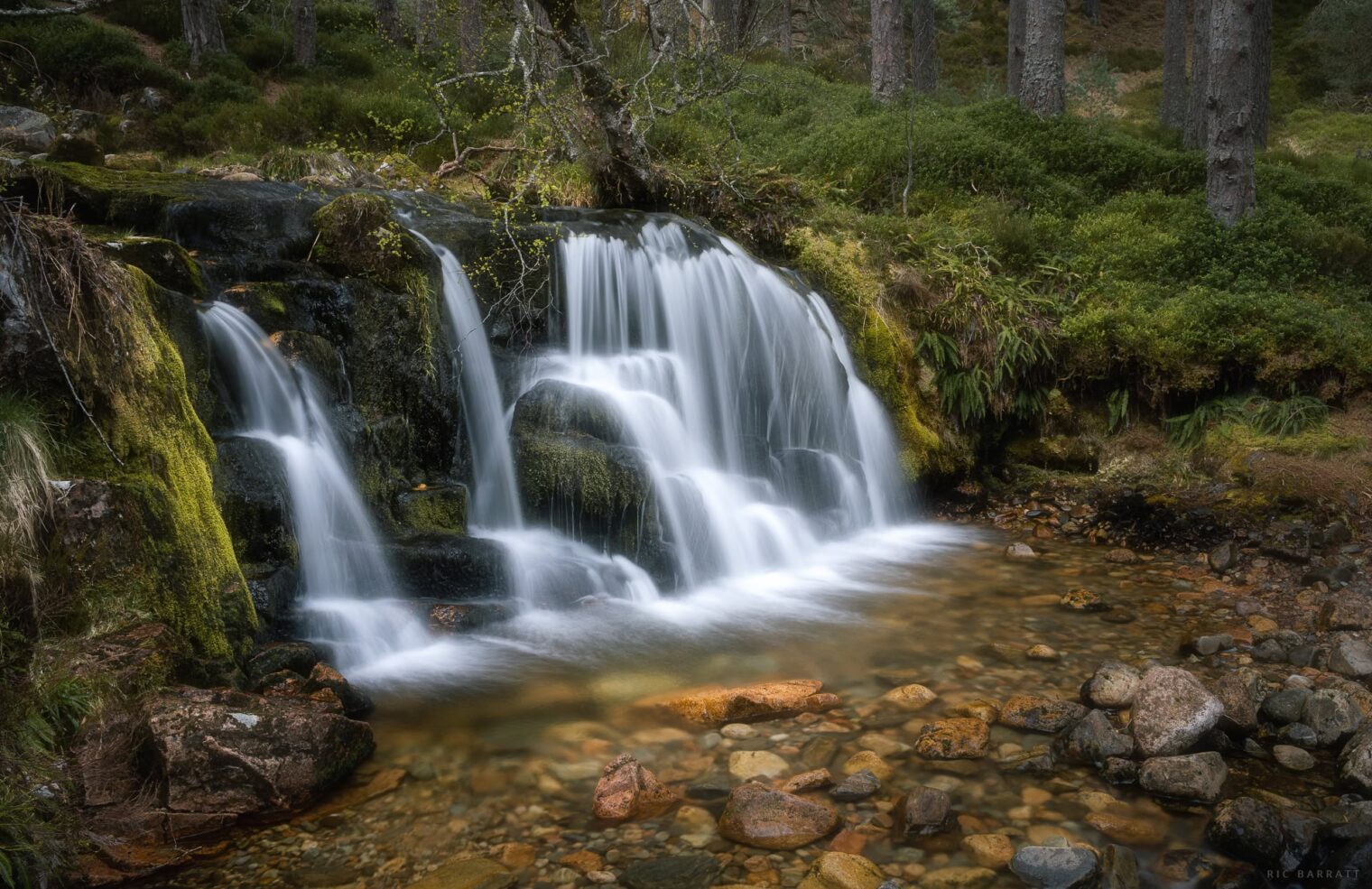
One of my favourite subjects in photography is waterfalls. There’s something endlessly mesmerising about water tumbling over cliffs and crashing into deep pools below.
Photographing them always feels a little like chasing magic, and no two visits are ever the same. Sometimes they’re calm and reflective, other times wild and powerful. That unpredictability is part of the adventure.
Waterfalls tell different stories in every season. From the warm glow of summer evenings to the dreamlike mood of overcast winter days, a cascade can look completely different depending on the light, the weather, and your perspective. These seasonal shifts alter the character of the water, giving photographers endless chances to see the same place anew.
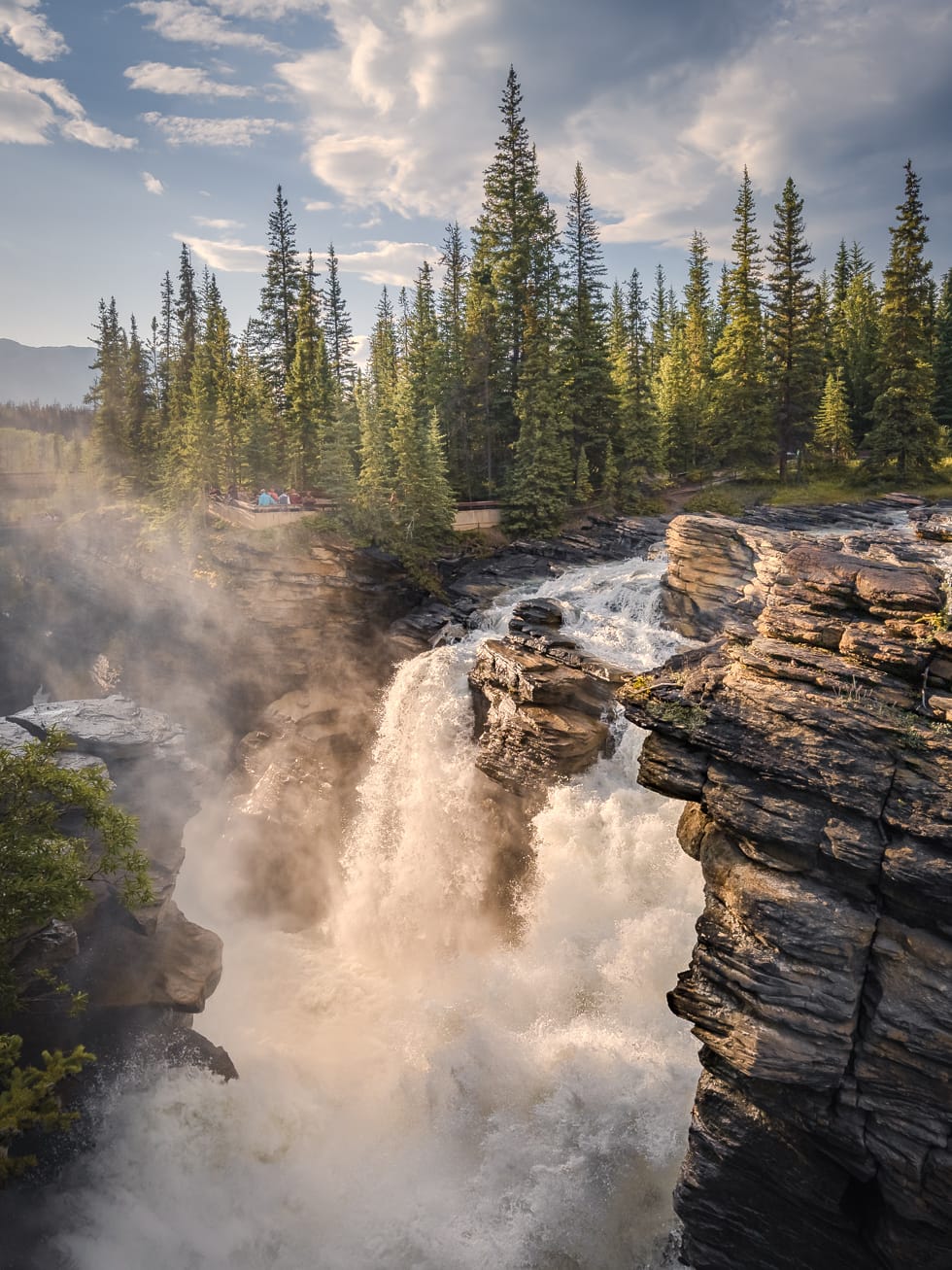
Part of the appeal is the exploration. Often, I’ll hear the rush of water before I see it—that distant roar growing louder as I approach. One visit that still lingers in my mind was to Athabasca Falls in Jasper National Park, Alberta. The water plunges roughly 23 metres through a narrow gorge, creating a thunderous roar that vibrates through the viewing platforms. It was impossible not to be fully present there, enveloped in mist, sound, and raw energy.
Yet even modest falls can reveal surprising beauty when you get low and close. One small waterfall that became one of my favourite prints was at the Ford at Caisteal Grugaig in the Highlands of Scotland. It wasn’t large, but the shallow stream tumbled over mossy rocks that channelled the water into flowing patterns, creating a vibrant and intimate composition. Scale isn’t always what makes a waterfall remarkable; it’s the way you see and capture it. Smaller waterfalls often appear in clusters too, offering multiple captivating compositions in a single area.
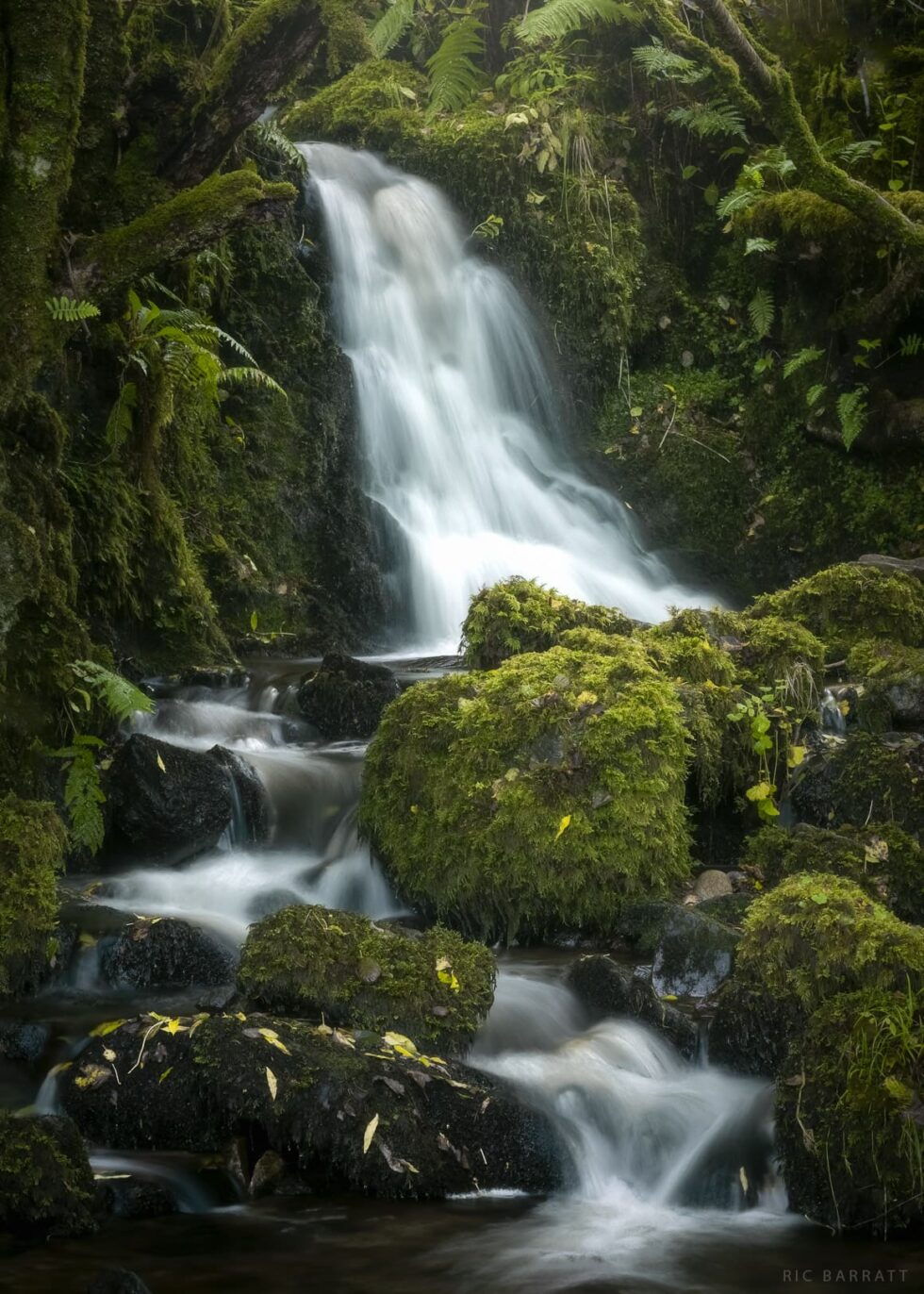
Experimenting with shutter speed, perspective, and composition allows me to capture the same waterfall in countless ways. Torrents of water can be transformed into silky flows with long exposures, translating the hypnotic movement of nature into a single frame in time. Or you can try a fast shutter speed to freeze water in mid-air, showing the sheer force and power of larger falls.
What I love most about this pursuit is that rainy days are no longer a negative. Downpours that might otherwise keep me indoors often create the most dramatic opportunities. Of course, this comes with the distinct logistical nightmare of lens spray and rain drops on lenses. I remember the sheer futility of trying to balance an umbrella in the wind while my lens glass became a magnet for every droplet. Yet, when I manage to turn a stormy day into an image that feels almost numinous, it’s deeply satisfying.
For me, photographing waterfalls isn’t just about the images. It’s about being present—listening to the water, feeling the cool mist, and connecting with the landscape. The experience is meditative and energising, engaging more senses than almost any other type of landscape photography.
Whether it’s the intimate scale of the smallest cascade or the thunderous beauty of Athabasca, it’s the combination of discovery and atmosphere that keeps me returning to the water.