
There are times when something catches my attention before I’ve fully registered it. It might be a patch of light on a hillside, an unusual arrangement of people, or the way a landscape briefly comes together as I’m travelling.
I notice it just enough to think that’s interesting, but not enough to stop. Then, a few moments later, I realise I’m still thinking about it.
Looking back, I’ve realised these interruptions are sometimes the beginning of a photograph. It isn’t a fully conscious idea or a clear composition. More often it’s just a gut-feeling that I’ve seen something worth another look.
When I first became interested in photography, I don’t think I recognised those moments very often. If something interesting caught my eye but I couldn’t immediately explain why, I usually carried on. I assumed that if a scene was truly worth photographing, it would make itself obvious.
Over time, though, I’ve realised that the photographs I value most rarely announce themselves so clearly. They often begin quietly, and learning to recognise those moments has become part of the process of making photographs.
• • •
Driving has made me particularly aware of this. When you’re on foot, it’s easy enough to stop for a closer look. In a car, every decision to pull over or turn around interrupts the journey, so there’s a temptation to keep going. That’s often when I notice this strange conversation with myself most clearly.
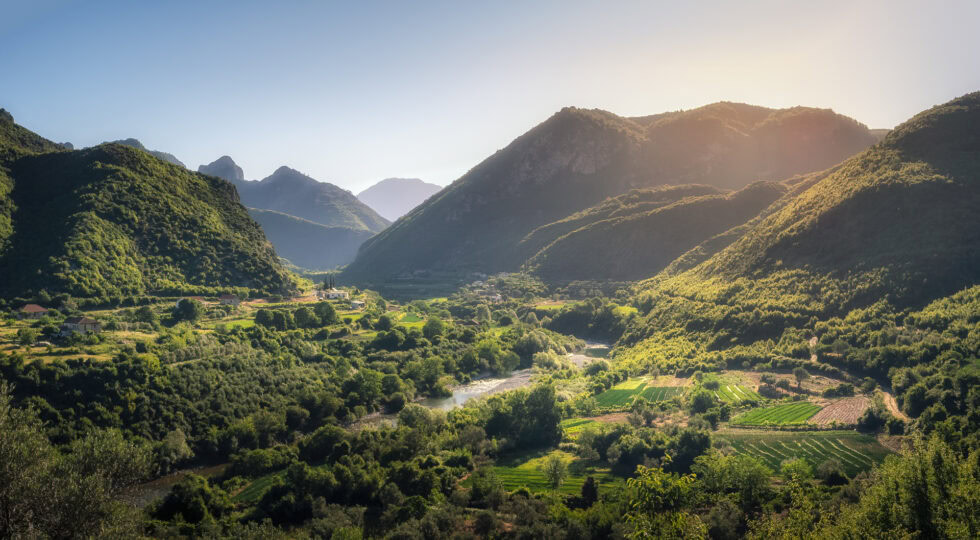
I remember driving through the mountains near Shkodër in Albania when the valley suddenly opened out into green fields beneath the surrounding hills. Early morning light was beginning to fall across the landscape. I remember thinking, almost absent-mindedly, that’s nice, but we’d already driven on. Ten minutes later I was still thinking about it.
I couldn’t have explained why it had stayed with me. There was no waterfall, or any single point of interest. I only knew that something had caught my attention strongly enough that I wanted to see it again. Perhaps it was the light, perhaps it was the layout of the terrain, or perhaps I’d imagined there was more to it than there really was. Whatever the reason, the thought refused to disappear, so we turned the car around.
Sometimes that second look confirms there wasn’t really a photograph there after all. The scene isn’t quite what I remembered, or the light has changed, and I simply continue on my way. But every now and then, turning back leads to the photograph I remember most from the day. I’ve learned that it’s worth accepting a few unnecessary stops if it means not missing those quieter opportunities.
• • •
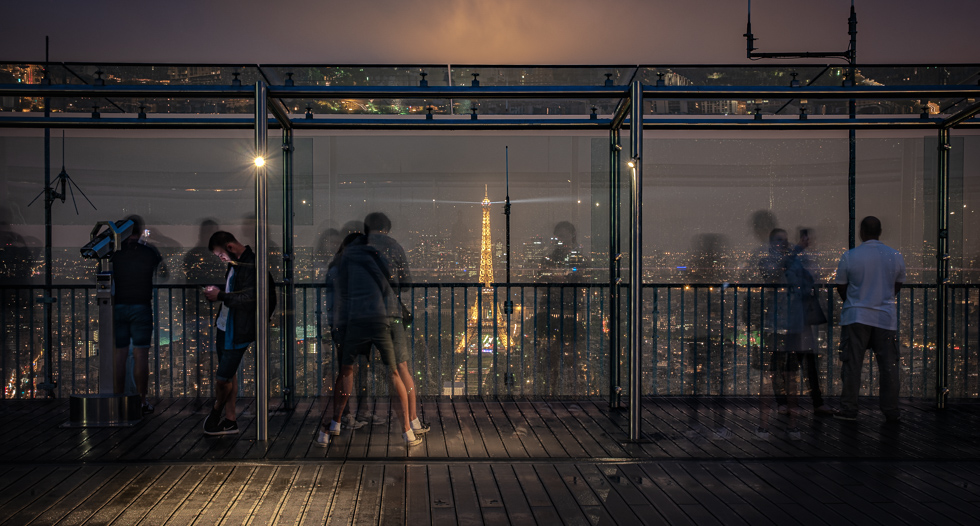
A similar thing happened during a visit to the Montparnasse Tower in Paris. Like almost everyone else, I’d gone there to photograph the view. The Eiffel Tower stood prominently against the skyline, but the viewing platform was crowded with visitors trying to find a space at the rain-covered windows. I spent some time hoping the crowds would thin.
I managed to get a few shots of the same view as everyone else. But as we were about to leave, something made me pause. This time I wasn’t looking beyond the people towards Paris. I was looking at the people themselves.
Visitors leaned against the glass, pointed into the distance and took selfies against the skyline. The reflections of the city in the rain-covered glass had become just as interesting as the skyline beyond.
Without really noticing when it happened, my attention had shifted away from the landmark I’d come to photograph and towards the experience of everyone gathered around it.
That photograph became one of my favourites from the trip. It wasn’t the image I’d expected to make when I arrived, but perhaps that’s exactly the point.
• • •
Looking back, I’ve come to think it’s less about instinct than about learning to pay attention to those small interruptions that arrive before conscious thought has caught up. Experience hasn’t given me an ability to predict good photographs. If anything, it’s simply made me better at recognising the moments that deserve another look.
I still miss photographs. I still drive past scenes that only occur to me later, and I still stop for places that turn out to be far less interesting than I imagined. But I ignore those moments less often than I used to.
The photographs I’m happiest with rarely announce themselves. More often they begin with a passing thought that lingers just long enough to make me ask a simple question.
What was that?